You are moving through a Greek city surrounded by the familiar grey concrete apartment blocks of the post-war era, and suddenly, almost as if someone has dropped it there by mistake, a mansion appears behind a garden.
That contrast was what first caught my attention in Thessaloniki.
I started photographing the city's older buildings more than a decade ago, when finding information about many of them online was surprisingly difficult. There was no convenient catalogue showing what these buildings were, who had built them or what had happened to them. Some were abandoned, some were hidden behind overgrown gardens, and some were simply easy to miss.
So I decided to explore them the old-fashioned way: I started at one end of Vassilissis Olgas Avenue, put my camera in one hand, grabbed something cold to drink in the other, and walked.
What started as a photography project became an attempt to understand another side of Thessaloniki — a city whose history is much more recent and much more complicated than its famous Byzantine monuments might suggest.
Why Vassilissis Olgas is worth exploring
Vassilissis Olgas is one of the best places to start if you want to see this architectural side of Thessaloniki.
The avenue connects the city centre with its eastern neighbourhoods, and along and around it are historic residences and institutional buildings dating mainly from the late 19th and early 20th centuries.
The interesting part isn't simply the number of old buildings.
It is the contrast.
You can be looking at an elaborate mansion and, only a few metres away, see a completely ordinary apartment building. When I was photographing these buildings in 2014, Greece was still deep in its economic crisis, which made that contrast even more striking to me. People were struggling, rents were comparatively cheap in some areas, and yet these enormous reminders of another era were still standing among them.
That paradox is part of what makes photographing Thessaloniki's historic architecture so interesting.
I didn't always know what I was photographing
One of the things I enjoyed most about this project was that I didn't approach every building with a prepared list. Sometimes the building was obvious. Casa Bianca, for example, is difficult to miss and has plenty of historical information associated with it.
Other times I photographed something first and investigated it later. I would come home, look through books and other sources, and try to identify what I had seen.
That changed the experience for me. Instead of walking through Thessaloniki looking for buildings I already knew existed, I was discovering them first and learning their stories afterwards.
And the stories are often what make the photographs more interesting.
Who built the house?
Why was it there?
Who could afford to live in it?
When did it stop being used?
What happened to the people who built these enormous residences?
And why did some buildings survive while others disappeared?
Historic buildings to look for in Thessaloniki
The original project identified a surprisingly large collection of buildings. I've grouped them below according to the original article's classification, but the important thing is not to treat this as a checklist that you have to complete.Neoclassical buildings
- The III Army Corps building
- The (at the time) ministry of Macedonia and Thrace, generally known as Goverment House
- Villa Ahmet Kapanci
- Villa Mordoch
- The Casa Bianca
- The K. Mitta's Residence
- Villa Mehmet Kapanci
- The Papafion Foundation
- The old customs house
- The School of Philosophy of the Aristotle University of Thessaloniki
- Villa Allatini
- The old Greek general consulate
- Chateau mon amour
- Villa Modiano
- Villa Osman Ali Bey
- Villa Hafiz Bey
- Yeni Mosque
- Salem Mansion
- Villa Hirsch
- Villa Chatzilazarou / Siaga
- Longos Mansion
- Allatini Mills
Neoclassical buildings
The III Army Corps (Γ' σώμα στρατού)
Completed: 1890
Original purpose: Ottoman military barracks
Architect: Vitaliano Poselli
Current use in the original article: III Greek Army Corps

The building is one of the reminders that Thessaloniki's architectural history cannot be separated from its Ottoman past.
For me, buildings like this are interesting because they provide physical evidence of how important Thessaloniki was before the modern Greek city took the form we recognise today.The Government House (Διοικητήριο)
Completed: 1891
Original purpose: Residence of the governor-general of the Salonica Vilayet
Architect: Vitaliano Poselli

Another building associated with the city's Ottoman administration.
It is particularly useful for understanding that the architecture around Thessaloniki isn't simply a collection of attractive old houses. These buildings tell us something about how the city was organised and where political and economic power was concentrated.Completed: 1895
Original purpose: Residence of merchant, industrialist and banker Mehmet Kapanci
Architect: Pietro Arrigoni
Use listed in the original article: Cultural Centre of the National Bank of Greece in Thessaloniki

The Kapanci villas are particularly interesting because they connect the architecture with the commercial wealth of Thessaloniki at the time.
That is one of the themes I find most fascinating when looking at these buildings: architecture becomes evidence of the people and economic activity that once shaped the city.Completed: 1905
Original purpose: Residence of Seifullah Pasha
Architect: Xenophon Paionidis
Use listed in the original article: Municipal offices

Completed: 1913
Original purpose: Residence of Dino Fernandez Diaz and his family
Architect: Pietro Arrigoni
Use listed in the original article: Municipal Art Gallery

Casa Bianca is where this project really started for me
Completed: 1920
Original purpose: Residence of K. Mitta
Architect: Unknown in the original article
Use listed: None

This is also a good example of why I wouldn't recommend trying to experience Thessaloniki's historic buildings purely through a pre-made online list.
Some buildings are well documented.Others leave you with questions.
And sometimes the questions are more interesting than the answers.
Completed: 1895
Original purpose: Residence of Ahmet Kapanci
Architect: Pietro Arrigoni
Use listed in the original article:Municipal Services

The Kapanci family is another reminder of the city's multicultural and commercially prosperous past.

Completed: 1903
Original purpose: Orphanage
Architect: Xenophon Paionidis
Use listed: Child Care Centre

Completed: 1912
Original purpose: Customs house
Architects: Alexandre Vallaury and Eli Modiano
Use listed: Passenger port station

This is an especially useful building to think about in the context of Thessaloniki's role as a trading city.
The location of buildings like this helps you reconstruct the city's historical "veins": where goods, people and money were moving.Completed: 1888
Original purpose: Ottoman administrative centre
Architect: Vitaliano Poselli
Current use: School of Philosophy, Aristotle University of Thessaloniki
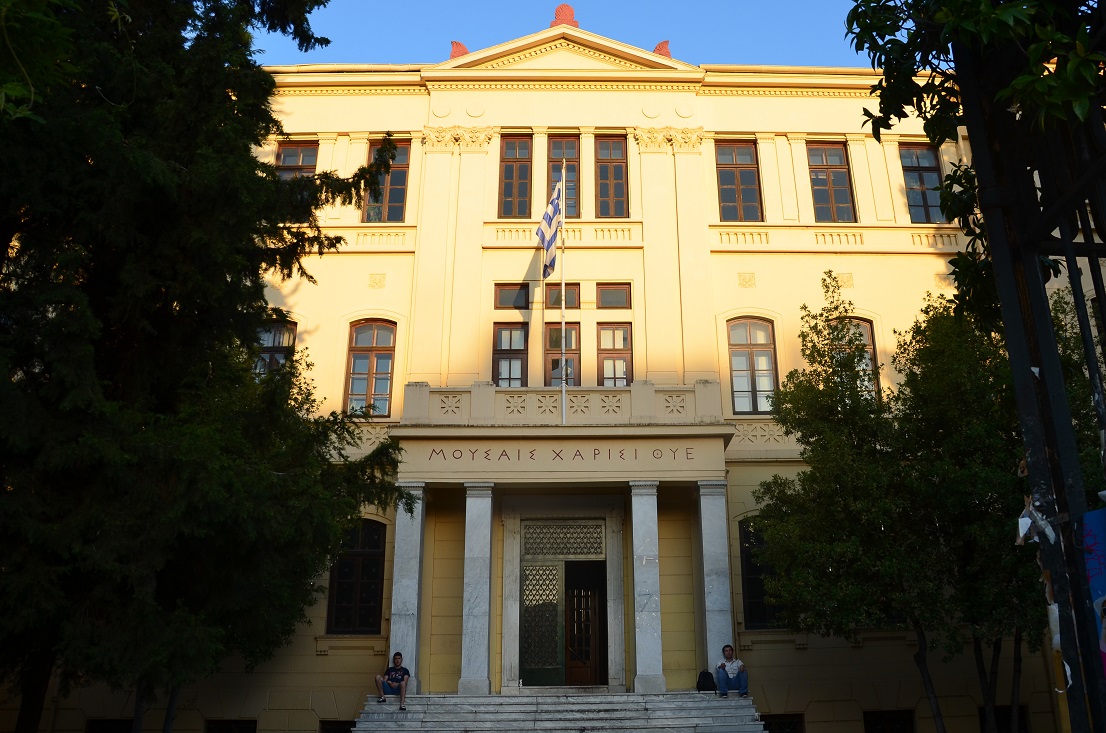
The building illustrates something that repeatedly appears in Thessaloniki: buildings changing purpose as the city itself changes.
Completed: 1898
Original purpose: Residence of the Allatini family
Architect: Vitaliano Poselli
Use listed in the original article: Offices of the Central Macedonia Region

Completed: 1893
Original purpose: Residence and workplace of the Greek consul general
Architect: Ernst Ziller
Use listed: Museum of the Macedonian Struggle

Other Mansions
The architectural story doesn't end with the buildings usually labelled "neoclassical."
The original project also included several other mansions and historic buildings. The ones that I discovered are the below:
Completion date: 1890
Intented use: Demonstration of love from D. Tsakerentzi to his love, named Eftichia (happiness)
Use today: None
Architect: Ermst Ziller

Completed: 1906
Original purpose: Residence of banker Yiako Modiano and his family
Architect: Eli Modiano
Use listed: Folklife and Ethnological Museum of Macedonia and Thrace

Completion date: 1897
Intented use: Residence
Use today: Center for Byzantine Research of the Aristotle University of Thessaloniki
Architect: Frederic Charnot

Completion date: 1907
Intented use: Residence
Use today: School for the Blind (Thessaloniki)
Architect: Xenophon Paionidis

Completion date: 1902
Intented use: Mosque
Use today: Exhibition Centre
Architect: Vitaliano Poselli


These buildings make one thing particularly clear: Thessaloniki's architectural history doesn't fit neatly into a single Greek, Ottoman or Byzantine box.
Abandonded Buildings
This is where my curiosity becomes strongest.A beautiful building that has been maintained is impressive.
A beautiful building that has been abandoned makes you start asking questions.
The original project documented several:
- Salem Mansion
- Villa Hirsch
- Villa Chatzilazarou / Siaga
- Longos Mansion
- Allatini Mills
Completion date: 1878
Intented use: Residence of Jeborga family
Use today: None
Architect: Xenophon Paionidis


Completion date: 1911
Intented use: Residence of Vitali Fernandez
Use today: None
Architect: Pierro Arrigoni

Completion date: 1890
Intented use: Residence of Chatzilazarou family
Use today: None
Architect: Xenophon Paionidis


Completion date: 1926
Intented use: Residence of Grigorios Longos family
Use today: Greek foodball team (PAOK) merchandising boutique
Architect: Leonardo Gennari

Completion date: 1898
Intented use: Various uses for the Allatini businesses (warehouses, administration, refrigeration etc.)
Use today: None
Architect: Vitaliano Poselli

How I recommend exploring Vassilissis Olgas
And Thessaloniki can be hot and humid, so buy something cold from a local shop. You're supporting a local business and making the walk considerably more pleasant.
If you come across Elenidis, or another good sweet shop, try a Trigono Panoramatos, one of Thessaloniki's characteristic sweets.
And if you get tired, look for one of the historic properties whose garden has been turned into a café or bar.
Sit down.
Have something to drink.
And look at the building.
You don't have to turn the walk into an architectural expedition.
Actually, I think you'll get more out of it if you don't.
Don't forget to look beyond Byzantine Thessaloniki
When people think about visiting Thessaloniki, Byzantine history naturally gets a lot of attention.
It deserves it.
But it isn't the whole story.
These mansions, administrative buildings, schools, consulates, industrial buildings and religious buildings reveal another Thessaloniki — one connected to trade, industry, different communities and a much more recent past.
Walking through the city and observing its buildings lets you imagine where wealth was concentrated, how the city was organised and where its important "veins" once ran.
Much of that landscape has been obscured by the enormous amount of post-war construction.
But it hasn't disappeared completely. You just have to look. And that's ultimately why I enjoyed this little project so much.
I wasn't trying to produce a perfect catalogue of Thessaloniki's architecture.
I simply wanted to walk through my city with a camera, find the buildings that were hiding in plain sight, and understand what they were telling me.
If you like architecture and photography, try doing the same.
Take the bus.
Get off.
Put the phone away.
Walk.
And see what you find.